
Coccidiosis remains one of the most significant parasitic diseases affecting poultry worldwide. This intestinal disease, caused by protozoans of the genus Eimeria, has a direct impact on poultry health management, productivity, and economic performance across both broiler, layer and breeder operations.
For poultry professionals, understanding coccidiosis, its lifecycle, and the available control and prevention strategies is essential to maintaining optimal flock performance and supporting sustainable poultry production.
What Is Coccidiosis? Understanding Eimeria Infection in Poultry
Coccidiosis is an intestinal disease triggered by protozoan parasites of the genus Eimeria. These parasites infect the gut lining, leading to intestinal lesions, which can impair nutrient absorption and compromise broiler gut health.
Several Eimeria species affect poultry, each targeting specific sections of the intestine. Once ingested, the parasite undergoes a complex lifecycle inside the host. This lifecycle includes multiple replication stages, resulting in intestinal damage and the shedding of oocysts into the environment.
Because these oocysts are highly resistant, they can persist in poultry houses, making coccidiosis control particularly challenging without proper management practices.
The Economic Impact of Coccidiosis in Poultry Production
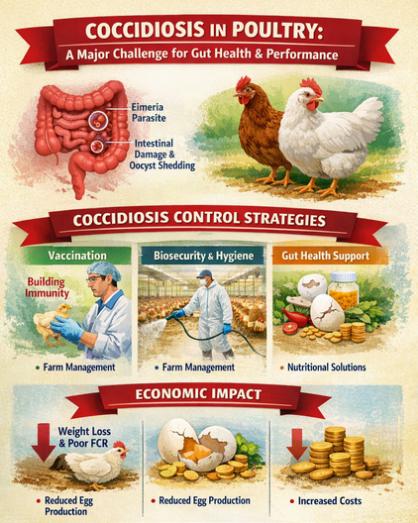
As explain in https://poultry.ceva.com/, the economic impact of coccidiosis in poultry is substantial and multifactorial. Even subclinical infections can reduce performance without obvious clinical signs, making the disease difficult to detect early.
Key impacts include:
- Reduced weight gain, particularly important in broilers
- Impaired feed conversion ratio
- Decreased egg production in layers and breeders
- Increased flock weight and growth variability
- Higher susceptibility to secondary infections
In this context, maintaining strong poultry health management practices is critical. Coccidiosis not only affects animal welfare but also directly influences profitability and production efficiency.
Coccidiosis Control: A Comprehensive Approach
Effective coccidiosis control relies on an integrated strategy combining multiple approaches rather than a single solution. The goal is not only to limit parasite replication but also to support the development of immunity and maintain gut integrity.
1. Vaccination Against Coccidiosis
Vaccination against coccidiosis is the main tool in modern poultry production to protect birds against coccidiosis. By exposing to controlled levels of Eimeria oocysts, vaccination supports the development of natural immunity without triggering severe disease.
This approach aligns with long-term coccidiosis prevention strategies by:
- Promotes the recovery of sensitivity of field strains of Eimeria spp to coccidiostats
- Reducing reliance on continuous anticoccidial use
- Supporting immune system development
- Contributing to more balanced parasite-host interactions
Vaccination is often integrated into broader coccidiosis control programs, depending on production systems and management objectives.
2. Biosecurity and Environmental Management
Environmental control plays a central role in limiting oocyst survival and transmission. Good practices include:
- Managing litter moisture to reduce oocyst sporulation
- Optimizing stocking density
- Ensuring proper ventilation
- Maintaining clean feeding and watering systems
These measures contribute to overall poultry disease prevention and reduce infection pressure within the flock.
3. Supporting Poultry Gut Health
Since coccidiosis primarily affects the intestine, maintaining strong poultry gut health is essential. A well-balanced gut environment can help birds better cope with parasitic challenges.
Nutritional strategies and poultry feed additives may support intestinal integrity and microbiota balance. While these approaches do not replace coccidiosis control programs, they can be part of a broader strategy to improve resilience against Eimeria infection in poultry.
4. Anticoccidial Programs and Sensitivity Management
Anticoccidial programs have historically played an important role in managing coccidiosis. However, over time, reduced sensitivity of Eimeria populations can occur.
This is why strategies aiming to restore sensitivity are increasingly considered within integrated control programs. Rotational approaches and careful program design can help maintain long-term effectiveness while supporting sustainable poultry production.
Coccidiosis Prevention: Why Early Management Matters?
Focusing on coccidiosis prevention rather than reaction is essential for minimizing production losses. Preventive strategies aim to reduce infection pressure while allowing birds to build immunity under controlled conditions.
Key elements include:
- Early-life vaccination of chicks
- Monitoring of litter conditions
- Regular assessment of flock health
- Adaptation of control programs based on risk level
Because poultry intestinal parasites are part of the production environment, complete elimination is not the objective. Instead, the goal is to maintain a balanced exposure that supports immunity without compromising performance.
Recognizing Coccidiosis in Chickens
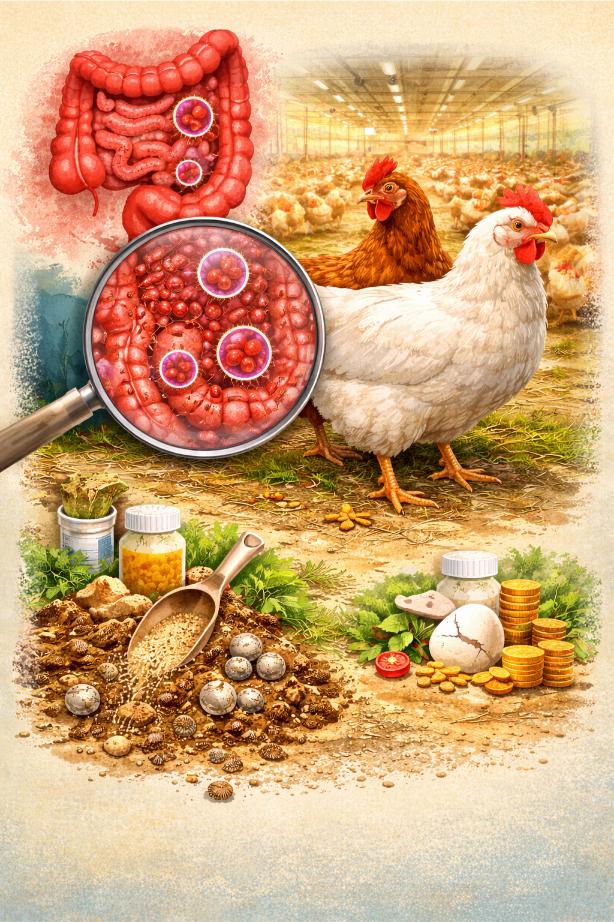
Although this article focuses on prevention and control, recognizing coccidiosis in chickens remains important for timely intervention.
Common signs may include:
- Reduced growth performance
- Uneven flock development
- Changes in droppings
- Decreased feed intake
However, subclinical forms are frequent and may only be detected through performance monitoring or diagnostic evaluation. This reinforces the importance of proactive poultry health management.
You can check more about the differences between clinical and subclinical form of coccidiosis on Poultry CEVA’s website.
Toward Sustainable Coccidiosis Management
Modern poultry production requires a shift toward more sustainable and integrated approaches. Managing coccidiosis in poultry is no longer about a single method but about combining tools effectively.
A comprehensive strategy may include:
- Strategic use of vaccination
- Strong biosecurity and hygiene practices
- Optimized nutrition and gut health support
- Well-designed anticoccidial programs
- Continuous monitoring and adaptation
By combining these elements, producers can better control Eimeria infection in poultry, reduce the economic impact of coccidiosis, and improve overall flock performance.
Coccidiosis continues to be a major challenge in poultry production, affecting both animal health and economic outcomes. Understanding the dynamics of intestinal coccidiosis in poultry and implementing effective coccidiosis control and prevention strategies are essential for long-term success.
Through a holistic approach that integrates poultry coccidiosis prevention, gut health management, and adaptive control programs, producers can maintain healthier flocks and more consistent performance in an evolving production landscape.