
Moving across borders is never just a larger version of moving across town. It combines packing, transport, insurance, customs paperwork, timing, storage, and final delivery into one chain of decisions. A sofa, family heirlooms, or professional equipment may look simple while it is still in the same room. Once it must cross a border, every item becomes part of a regulated journey.
That is why successful international moves begin with preparation rather than packing. Before choosing boxes or booking dates, it is worth understanding what will travel, how it will travel, and which documents will be required. The earlier this structure is created, the easier it becomes to avoid delays, unexpected costs, and last-minute stress.
Start With a Clear Inventory
A detailed inventory is the backbone of any international move. It helps estimate volume, identify fragile or high-value items, prepare customs declarations, and choose the right transport method. It can also support insurance claims, clarify responsibilities between service providers, and make unpacking more organized.
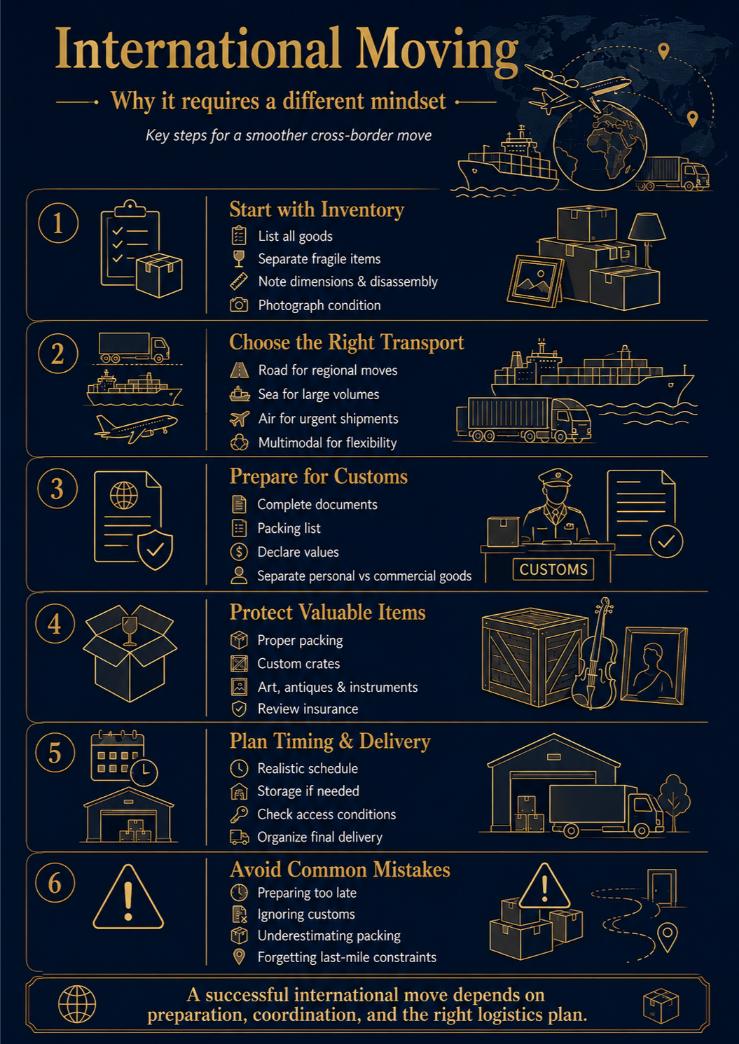
The inventory should separate everyday household goods from delicate, valuable, or regulated items. Artworks, antiques, musical instruments, professional equipment, electronics, and personal archives may require specific packing or documentation. Photographs are also useful, because they provide a record of condition before packing.
For furniture, note dimensions and disassembly requirements. For fragile goods, mention materials such as glass, marble, ceramic, canvas, or polished wood.
Choose the Right Transport Method
International moves usually rely on road, sea, air transport, or a combination of several options. The best choice depends on distance, urgency, budget, volume, and the nature of the goods.
Air freight is often preferred when speed matters. It can suit essential personal effects, urgent professional materials, or smaller shipments that need to arrive quickly. Sea freight is commonly used for larger volumes, especially full household moves or business cargo. It is generally slower, but it can be more cost-effective for heavy or bulky shipments. Road transport remains essential for European moves, regional deliveries, and the first or final leg of a multimodal shipment.
In many cases, the answer is not one single method but a coordinated route. A shipment may begin by road, continue by sea or air, then be delivered locally by another vehicle. This is where a specialized freight forwarder becomes valuable. Companies such as Transports Mari help connect transport, customs, storage, and delivery services so the move is managed as a complete process rather than disconnected steps.
Understand Customs Before You Ship
Customs procedures are one of the most common sources of confusion in international moving. Each country has its own rules for importing personal effects, commercial goods, vehicles, artworks, and restricted items. Requirements may include passports, residence documents, proof of transfer, packing lists, invoices, certificates of origin, or declarations of value.
A missing or inaccurate document can slow down the entire move. In some cases, it can create storage charges while goods wait for clearance. Customs should therefore be considered from the beginning, especially if the shipment includes high-value items, recently purchased goods, professional equipment, or products intended for resale.
It is also important to distinguish between personal effects and commercial shipments. A family relocation, an antiques dealer sending objects to a fair, and a company exporting equipment may all use transport services, but their customs obligations can be very different.
Protect Fragile, Valuable, and Unusual Items
Packing is not simply about putting objects into boxes. It is about matching materials and techniques to the risks of the journey. International shipments may face handling at warehouses, transfers between vehicles, temperature changes, humidity, vibration, stacking pressure, and customs inspections. Proper packing reduces the likelihood that normal transport conditions become damaging.
Fragile items may need cushioning, double boxing, crates, corner protection, and clear labeling. Artworks can require made-to-measure crates, breathable materials, climate awareness, and careful handling instructions. Antiques often combine fragility with irregular shapes, aged materials, and surfaces that can be damaged by pressure or abrasion. Pianos, sculptures, mirrors, chandeliers, and marble pieces require planning before moving day, not improvisation on arrival.
Insurance should also be discussed early. The goal is not only to buy a policy, but to understand what is covered, how values are declared, what exclusions apply, and which evidence would be needed in the event of a claim.
Plan for Timing, Storage, and Delivery
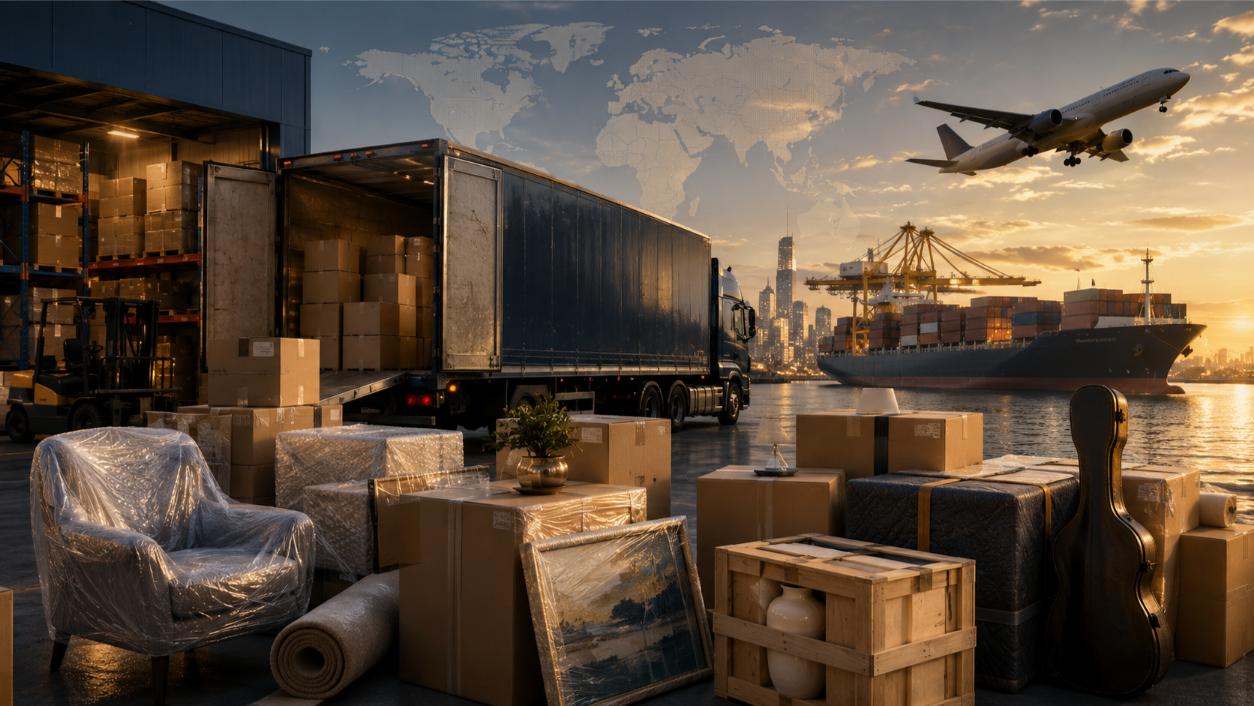
International moving rarely follows a perfectly straight timeline. Homes may not be ready, visas may be delayed, customs may take longer than expected, or a delivery address may change. Storage can provide flexibility when dates do not align.
Secure warehousing is useful for both individuals and professionals. A family may need temporary storage between leaving one home and entering another. A business may need to consolidate goods before export.
An antiques dealer may need storage before a fair, exhibition, or auction delivery. The key is to choose storage that matches the goods: ordinary furniture, sensitive artwork, refrigerated products, and palletized cargo do not all require the same conditions.
Delivery planning also deserves attention. Access restrictions, elevators, parking permits, narrow streets, stairs, and building rules can all affect the final stage. The last hundred meters are sometimes the most difficult part of the move.
A Better Move Is a Better System
The difference between a stressful move and a controlled one is rarely luck. It is usually the quality of the system behind it. A successful international shipment connects inventory, packing, routing, customs, insurance, storage, and delivery into one coherent plan.
Whether the move involves a few personal belongings, an entire household, a vehicle, antiques, artwork, or professional cargo, the principle is the same: prepare early, document clearly, choose the right transport method, and work with partners who understand both logistics and regulation. When each stage is planned, international moving becomes less of a leap into the unknown and more of a managed transition from one place to the next.